Why Choose Dental Implants? Benefits, Options, Costs, and What to Expect
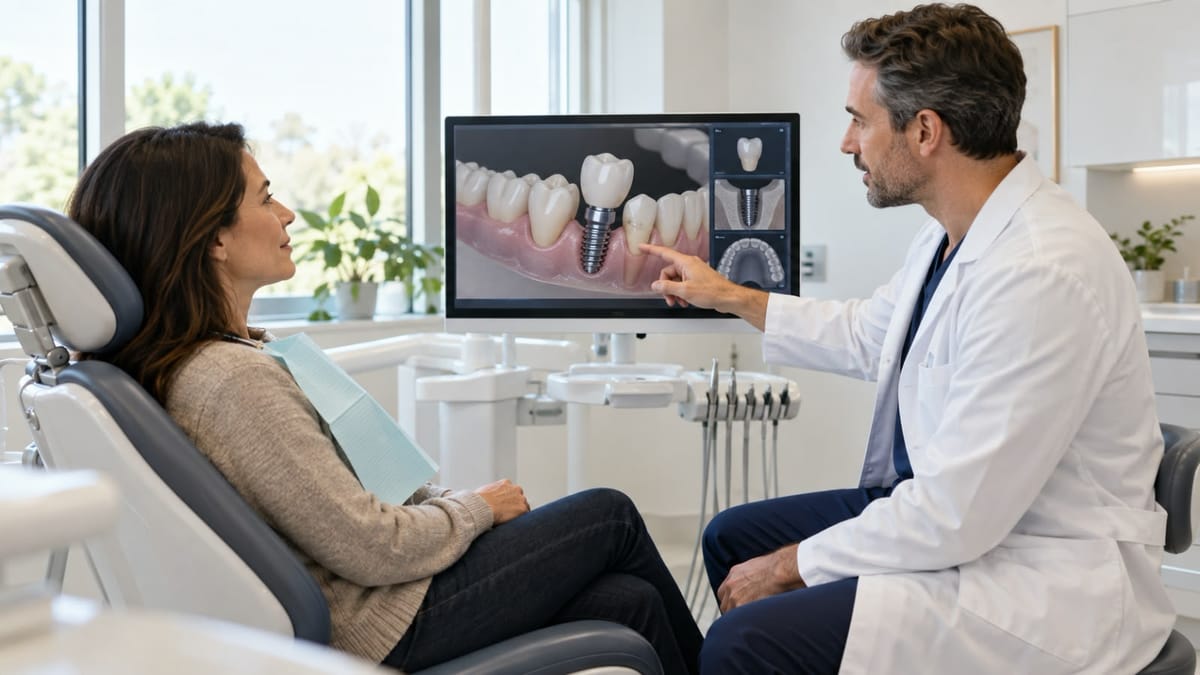
A missing tooth can affect much more than the appearance of your smile. It may change how you chew, influence speech, alter the way neighboring teeth meet, and gradually affect the bone and gums in the area.Dental implants are one of the most established options for replacing missing teeth because they restore support from within the jawbone. Depending on the case, implants can support a single crown, a multi-tooth bridge, a removable implant-retained denture, or a fixed full-arch restoration.At Esthetic Dent, patients can receive dental implants in Costa Rica through coordinated surgical, restorative, diagnostic, and laboratory care. Treatment is available in San José and in the Cóbano and Santa Teresa area for local and international patients.This guide explains how dental implants work, why they may be recommended, how they compare with other options, what they cost, and what long-term care requires.
What Are Dental Implants?
A dental implant is a biocompatible fixture placed surgically in the jawbone to replace the root portion of a missing tooth. Most dental implants are made of titanium, a material widely used because bone can heal and integrate around its surface.An implant restoration commonly has three components:1. Implant fixture: placed in the jawbone2. Abutment: connects the implant to the restoration when required3. Restoration: the visible crown, bridge, denture, or full-arch prosthesisThe healing process in which bone forms around and stabilizes the implant is called osseointegration. It takes time and is essential for long-term support.An implant is not a complete tooth by itself. When comparing prices or treatment plans, confirm whether the quoted amount includes the fixture, abutment, final restoration, diagnostics, temporary teeth, and any additional surgery.
What Can Dental Implants Replace?
Dental implant treatment is adapted to the number and location of missing teeth.
One missing tooth
A single implant can support an individual crown without requiring the neighboring teeth to support a traditional bridge.
Several missing teeth
Two or more implants may support an implant bridge, replacing several teeth with fewer implant fixtures than placing one implant for every missing tooth.
A removable denture that needs more stability
Implants can help retain a removable overdenture, reducing movement and improving stability. The denture remains removable for cleaning.
An entire arch of missing or failing teeth
All-on-4, All-on-5, All-on-6, or All-on-8 treatment can support a full-arch restoration. The appropriate number and position of implants depend on anatomy, available bone, bite forces, prosthetic design, and clinical judgment.
What Can Happen When Missing Teeth Are Not Replaced?
Not every missing tooth requires the same solution, and some spaces may be monitored in selected cases. However, untreated tooth loss can contribute to changes over time.
Neighboring teeth may shift
Teeth beside or opposite an open space may move, tilt, or erupt further. This can change the bite and make future restoration more complex.
Bone may gradually resorb
After a tooth is lost, the surrounding jawbone no longer receives the same stimulation from the tooth root. The ridge may gradually lose height and width.An implant can help maintain stimulation in the area where it is placed, but it does not guarantee that all future bone loss will be prevented. Gum health, hygiene, bite, smoking, medical conditions, and maintenance remain important.
Chewing may become less efficient
Missing teeth can make certain foods more difficult to chew. Patients may compensate by chewing predominantly on one side, which can overload other teeth and restorations.
Speech may change
The effect depends on the location and number of missing teeth. Front-tooth spaces and unstable dentures may alter the production of certain sounds.
Appearance and facial support may change
Missing front teeth directly affect the smile. Extensive tooth and bone loss can also reduce support around the lips and lower face.
Remaining teeth may carry greater forces
When fewer teeth remain, chewing forces are distributed across a smaller number of teeth. Replacing missing teeth may help rebalance function when the treatment is properly designed.
Why Choose Dental Implants?
1. They can look and feel similar to natural teeth
An implant-supported crown or bridge is designed to emerge from the gum area and blend with surrounding teeth. Shape, shade, bite, and gum contours are planned for the individual patient.Implants do not have the same sensation as natural tooth roots, but a well-designed restoration can provide stable, comfortable function.
2. They restore stable chewing support
Because implants are anchored in bone, they can provide greater stability than an unsupported removable denture. Chewing ability depends on healing, restoration design, number and position of implants, bite, and the types of food involved.Patients must follow dietary restrictions during healing and should not assume they can immediately chew every food after surgery.
3. They do not require preparation of healthy neighboring teeth
A conventional tooth-supported bridge generally requires reshaping the teeth beside the missing space. A single implant can replace the tooth without using those neighboring teeth as bridge supports.If adjacent teeth already require crowns, a bridge may still be a reasonable option. The best choice depends on the complete clinical situation.
4. They can help preserve bone in the implant area
The forces transmitted through an integrated implant provide stimulation to the surrounding bone. This can help maintain the ridge compared with an untreated missing-tooth site.Implants cannot reverse every type of bone loss, and some patients need grafting before or during placement.
5. They can improve denture stability
Implants may retain a removable overdenture or support a fixed full-arch restoration. Both can reduce movement compared with a conventional removable denture, but they have different costs, cleaning requirements, repair needs, and candidacy criteria.
6. They do not develop cavities
The implant and prosthetic crown cannot decay like natural tooth enamel. However, the tissues around an implant can develop inflammation and progressive bone loss known as peri-implant disease.Implants require daily plaque removal, professional examinations, and maintenance. “Cannot get a cavity” does not mean “cannot develop complications.”
7. They may support clearer speech
Replacing missing teeth or stabilizing a loose denture may improve speech for some patients. Results depend on the restoration design, tooth position, tongue space, and adaptation.
8. They offer multiple restorative possibilities
Implants can support fixed or removable solutions and can be used for one missing tooth, several teeth, or an entire arch. This versatility allows the restorative plan to be adapted to the patient's anatomy, goals, hygiene ability, and budget.
Dental Implants vs. Bridges vs. Dentures
|
|
|
|
|
|
|
|
|
|
|
|
|
|
|
|
|
|
|
|
|
|
|
|
|
|
|
|
|
|
|
|
No single option is best for everyone. Existing tooth health, bone, gums, bite, medical history, treatment goals, cost, and maintenance ability all matter.
Who May Be a Candidate for Dental Implants?
Implants may be considered for adults who:· Are missing one or more teeth· Have teeth that cannot predictably be restored· Want greater denture stability· Have adequate bone or are candidates for bone augmentation· Have gums healthy enough for treatment or can complete periodontal therapy first· Can maintain daily hygiene and professional follow-up· Have medical conditions that are appropriately controlled· Understand the healing time, risks, and maintenance commitmentAge alone does not determine candidacy. Overall health, medications, healing capacity, bone, and ability to maintain the implants are more important.
What If You Do Not Have Enough Bone?
Insufficient bone does not automatically mean implants are impossible.Depending on the location and severity of bone loss, treatment options may include:· Bone grafting· Sinus lift· Changes in implant size or position· A different restorative design· Custom subperiosteal implants for selected patients with severe bone lossEsthetic Dent can produce custom 3D-printed titanium subperiosteal implants in its own laboratory for carefully selected cases. A complete 3D evaluation is required to determine whether this or another approach is appropriate.
When Might Dental Implants Not Be the Best Option?
Implant treatment may need to be delayed, modified, or avoided when there is:· Uncontrolled gum disease· Active infection· Inadequate oral hygiene· Uncontrolled diabetes or another condition affecting healing· Heavy smoking or unwillingness to reduce risk factors· Certain medications or medical treatments affecting bone or healing· Insufficient restorative space· Unrealistic expectations· Inability to attend maintenance visitsThe medical and dental history must be reviewed before treatment. Patients should never stop prescribed medications without direction from the appropriate healthcare professional.
What Is the Dental Implant Process?
1. Free initial case review
Begin through the website form, WhatsApp, international telephone number, or email. Photographs and existing X-rays can help but are not required to start speaking with a Dental Advisor.
2. Complete diagnostic consultation
The clinical team reviews medical history, teeth, gums, bite, bone, and restorative needs. The evaluation may include digital X-rays, CBCT imaging, photographs, and intraoral scans.Esthetic Dent's complete diagnostic consultation costs $250 and is included in international treatment packages.
3. Surgical and restorative planning
Implant position is planned according to the final restoration. The team determines the implant system, number of implants, need for grafting, temporary restoration, healing approach, and final prosthetic design.
4. Implant placement
The implant is placed under local anesthesia. IV sedation with a licensed anesthesiologist is available when appropriate, but it must be coordinated in advance and is charged separately.Dental implant placement generally requires approximately four business days in Costa Rica, with arrival and departure days added separately.
5. Healing and osseointegration
The implant heals within the bone. This commonly takes several months and is often approximately six months, although the exact period varies.Patients receive instructions for diet, hygiene, medications, and activity. Esthetic Dent follows up during the healing phase and before the restorative visit.
6. Final restoration
After integration is confirmed, the implant is restored with the planned crown, bridge, overdenture, or full-arch prosthesis.Restorative treatments involving one to five units generally require approximately five business days. Treatments involving six or more units generally require approximately nine business days. Arrival and departure days are added separately.
How Much Do Dental Implants Cost at Esthetic Dent?
The approved starting international prices are:
|
|
|
|
|
|
|
|
|
|
|
|
Prices shown are starting prices. The final quote is confirmed after case review and diagnostic evaluation.The total may change based on extractions, bone grafts, sinus treatment, implant system, number of implants, temporary teeth, restoration material, sedation, and case complexity.Patients receive a written quote. Financing and payment options may be available; a Dental Advisor can explain which options apply to the individual treatment plan.
Which Implant Systems Does Esthetic Dent Use?
Esthetic Dent works with recognized implant systems, including options from Straumann Group, Zimmer, and Nobel Biocare, according to clinical needs and availability.Using an internationally recognized system can make future identification and access to compatible restorative components easier after the patient returns home.Patients receive documentation of the implant system and components used and should retain it with their dental records.
How Long Can Dental Implants Last?
Dental implants have strong long-term survival when they are appropriately planned, placed, restored, and maintained. However, survival percentages from published studies cannot guarantee an individual outcome.Longevity depends on:· Bone and gum health· Implant position and restoration design· Daily plaque control· Professional maintenance· Smoking or tobacco use· Diabetes and other medical factors· Grinding and bite forces· Mechanical wear of screws and restorative components· Attendance at follow-up visitsImplants and restorations may require maintenance, adjustment, repair, or replacement over time.
How to Care for Dental Implants
Implant care is not identical for every restoration. The dental team may recommend:· Brushing twice daily· Implant-safe floss or super floss· Interdental brushes· A water flosser· Cleaning under bridges and full-arch restorations· A night guard when grinding is present· Professional examinations and cleanings· Periodic X-rays when indicatedReport bleeding, swelling, persistent bad taste, discomfort, mobility, difficulty cleaning, or a change in the bite promptly.
Dental Implant Warranty at Esthetic Dent
Esthetic Dent provides a lifetime guarantee on dental implants and restorations according to the clinic's written warranty terms.Coverage depends on required hygiene, professional maintenance, follow-up, and other documented conditions. Patients should review the complete written warranty rather than relying on a summary statement.
Why Choose Esthetic Dent for Dental Implants in Costa Rica?
Patients benefit from:· More than 35 years caring for local and international patients· Eight full-time dental specialists· A maxillofacial surgeon on staff· Surgical and restorative planning within one team· CBCT imaging and digital intraoral scans· An in-house laboratory· Recognized implant systems· Custom 3D-printed titanium subperiosteal implant capability for selected cases· Written treatment planning and pricing· HIPAA-compliant records and secure file transfer· A Dental Advisor and Travel Coordinator· Treatment in San José or near Cóbano and Santa Teresa· Follow-up during healing and after treatment
Schedule a Free Initial Consultation
Whether you are missing one tooth, several teeth, or an entire arch, the right solution begins with understanding the condition of your bone, gums, bite, remaining teeth, and overall health.Contact Esthetic Dent through the website form, WhatsApp, international telephone number, or email. You can begin speaking with a Dental Advisor even if you do not yet have photographs, X-rays, or travel dates.
Frequently Asked Questions About Dental Implants
Why choose dental implants instead of a bridge or denture?
Implants can replace tooth-root support, avoid preparing healthy neighboring teeth in many single-tooth cases, improve stability, and help maintain bone around the implant. Bridges and dentures remain appropriate for some patients and may involve less surgery or shorter treatment. The best option depends on the individual case.
What is the success rate for dental implants?
Published studies generally report high implant survival, but no percentage guarantees an individual result. Bone, gum health, implant position, restoration design, smoking, diabetes, hygiene, and maintenance all affect outcomes. Ask about the risks and prognosis of your specific case.
What should I expect during the dental implant process?
Treatment usually includes diagnosis and 3D imaging, surgical and restorative planning, implant placement, a healing period for osseointegration, and placement of the final crown, bridge, denture, or full-arch restoration. Many cases require two trips.
Are dental implants painful to get?
Local anesthesia is used during placement. IV sedation is available when clinically appropriate and scheduled separately. Post-operative swelling, soreness, bruising, or temporary discomfort may occur and are managed with instructions and medication based on the individual case. Persistent or worsening symptoms should be reported.
Why get dental implants in Costa Rica instead of the United States?
Patients may save up to 70% on many treatments because operating costs in Costa Rica are lower. Esthetic Dent combines lower costs with dental specialists, digital diagnostics, an in-house laboratory, recognized implant systems, written planning, and international patient coordination. Actual savings depend on comparing equivalent treatment plans and total travel costs.
Can dental implants get cavities?
No. The implant and prosthetic restoration cannot develop tooth decay. However, plaque can inflame the tissues around an implant and contribute to peri-implant disease and bone loss. Daily cleaning and professional maintenance are essential.
Can I receive an implant and crown on the same day?
Immediate temporary teeth may be possible in selected cases when implant stability, bone, bite, and clinical conditions allow. Many implants should heal before receiving the final restoration. The clinical team determines the safest loading protocol.
What if I have severe bone loss?
Options may include bone grafting, a sinus lift, a different implant or restorative design, or a custom 3D-printed titanium subperiosteal implant for carefully selected patients. A CBCT-based evaluation is required.
Keep reading
Dental Implants for People With Diabetes: What You Need to Know
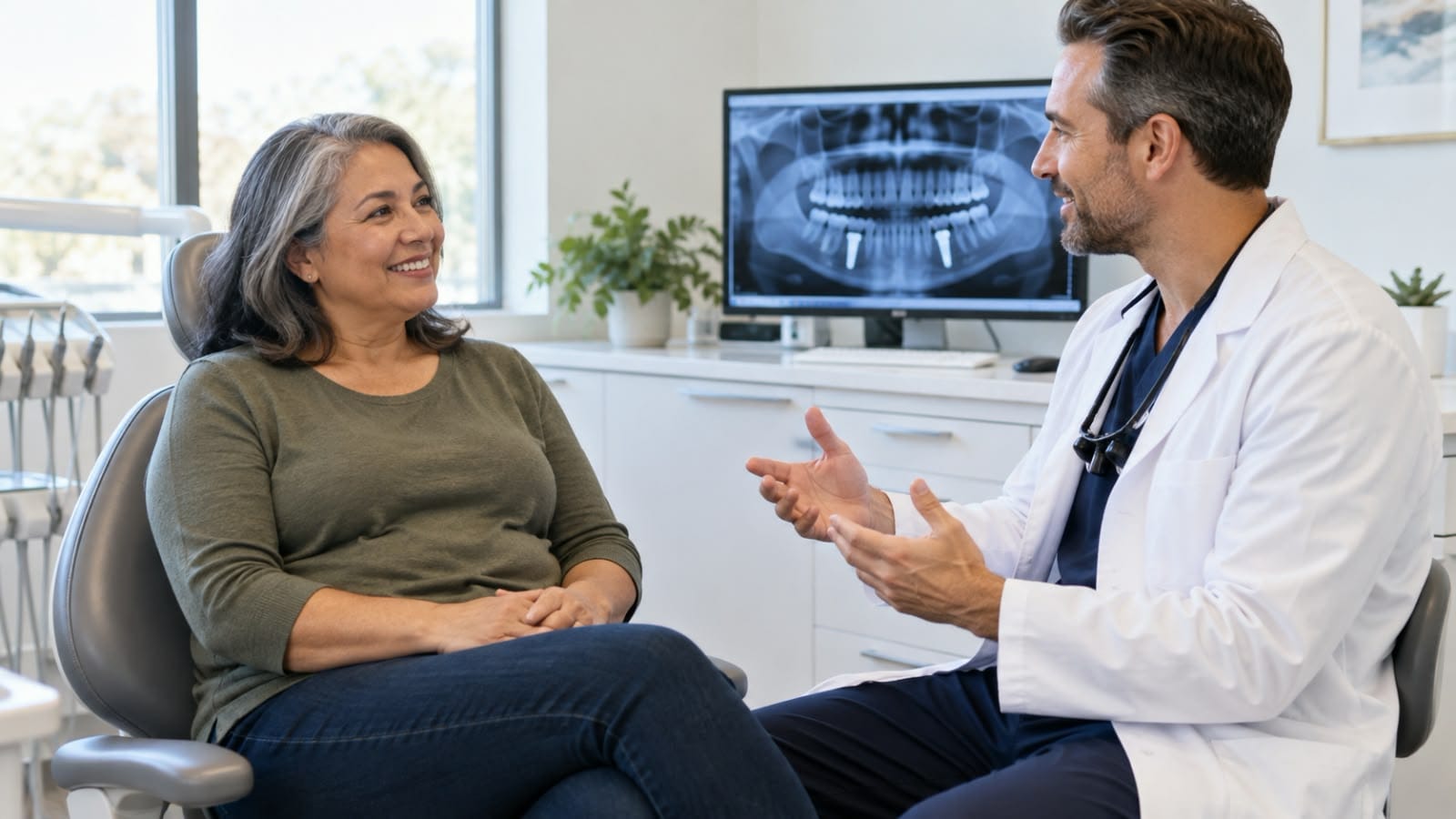
Having diabetes does not automatically prevent you from receiving dental implants. Many people with well-managed diabetes can be considered for implant treatment after an individualized clinical and medical evaluation. What matters most is not the diagnosis alone. Your current glucose control, gum and bone health, medications, healing history, smoking status, nutrition, and other medical conditio
Titanium vs. Zirconia Dental Implants: Which Is the Better Choice?
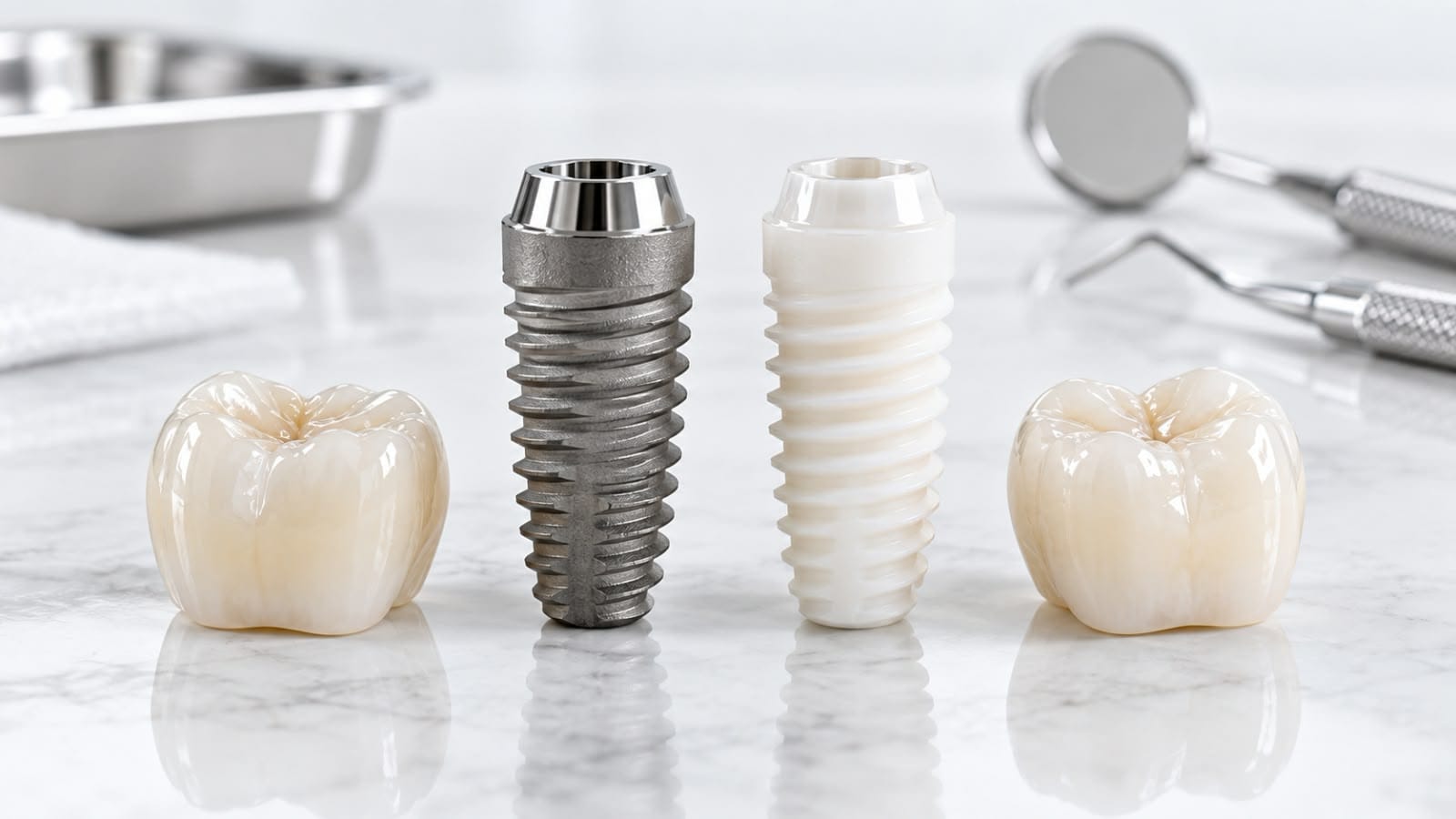
Dental implants can replace missing teeth with a fixed foundation designed to integrate with the jawbone. Most implant systems are made from titanium or zirconium oxide, commonly called zirconia. Both materials are biocompatible and used in dentistry, but they do not have the same clinical history, design flexibility, or volume of long-term evidence.For most patients and for many complex restorati

Blood Thinners and Dental Treatment: What You Need to Know Before You Travel
If you take a blood thinner and are planning dental treatment, you may be concerned about bleeding during or after your procedure. In many cases, taking this type of medication does not prevent you from receiving dental care. It simply means that your dentist needs accurate medical information and enough time to plan safely.Most important: Never stop, skip, delay, or change a prescribed blood thin