Titanium vs. Zirconia Dental Implants: Which Is the Better Choice?
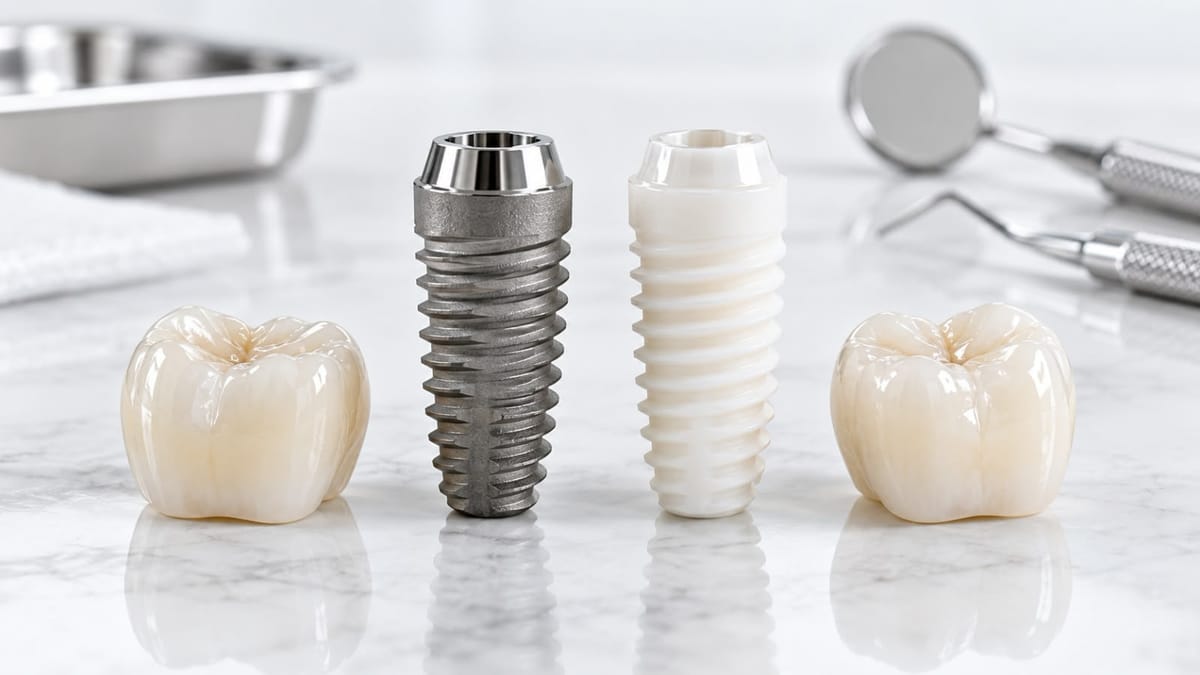
Dental implants can replace missing teeth with a fixed foundation designed to integrate with the jawbone. Most implant systems are made from titanium or zirconium oxide, commonly called zirconia. Both materials are biocompatible and used in dentistry, but they do not have the same clinical history, design flexibility, or volume of long-term evidence.For most patients and for many complex restorative cases, titanium remains the reference material because it has been used for decades, is available in a broad range of implant designs and components, and is supported by extensive clinical research. Zirconia can also be an appropriate alternative in selected situations.Important terminology: Zirconium is a chemical element. The ceramic material used for dental implants is zirconium oxide, or zirconia. The accurate comparison is titanium implants versus zirconia implants.
The Short Answer
Titanium is generally the more established and versatile choice, particularly for full-arch rehabilitation, cases requiring angled or customized components, and treatment plans that benefit from a large restorative ecosystem. Zirconia is a metal-free ceramic option that may be considered for selected patients, especially when aesthetics or a strong preference to avoid metal is important.The implant material should not be selected from marketing claims alone. Bone volume, bite forces, implant position, gum thickness, restoration design, medical history, maintenance, and the clinician’s experience all affect the recommendation.
Why Titanium Remains the Clinical Reference
1. Decades of Clinical Use and Research
Titanium implants have a substantially longer and broader clinical record than zirconia implants. Their performance has been studied across single-tooth replacement, multiple implants, implant-supported bridges, overdentures, and full-arch restorations.This larger evidence base does not guarantee success in every patient, but it gives clinicians more long-term information for treatment planning, risk assessment, maintenance, and management of complications.
2. Strength and Design Flexibility
Titanium combines high strength with useful mechanical properties for implant dentistry. Modern systems are available in different diameters, lengths, surface designs, connections, abutments, screws, and restorative components.· Single-tooth implants in anterior or posterior areas· Multiple implants supporting bridges· Full-arch treatments such as All-on-4, All-on-6, or other individualized configurations· Angled or customized abutments when implant position and prosthetic design require them· Cases involving limited bone, grafting, or complex restorative planning
3. Restorative Options and Future Maintenance
A widely used implant system can make it easier to identify compatible components if a crown, screw, abutment, or prosthesis needs maintenance in the future. Patients should receive written documentation of the implant brand, model, size, and components placed.The availability of parts varies by brand and location, so the implant passport or treatment record is important regardless of material.
4. Biocompatibility and Corrosion Resistance
Titanium and its alloys are selected for implants because of their biocompatibility, corrosion resistance, and ability to support osseointegration. The U.S. Food and Drug Administration notes that most dental implant systems are made from titanium or zirconium oxide and are evaluated using recognized material and biocompatibility standards.True hypersensitivity or intolerance to titanium appears uncommon, but symptoms should never be self-diagnosed. A patient with a documented history of reactions to metals or implant materials should discuss the concern with the implant dentist and an appropriate medical specialist.Clinical point: No blood test by itself can determine whether an implant will succeed. Material selection must be combined with a complete medical and dental evaluation.
What Are Zirconia Dental Implants?
Zirconia implants are ceramic implants made primarily from zirconium oxide. Their light color can be attractive in areas with thin gum tissue because there is less risk of a gray material showing through. They are also considered by patients who strongly prefer a metal-free implant body.
Potential Advantages of Zirconia
· White ceramic color that may benefit selected aesthetic cases· A metal-free implant-body option· Biocompatibility and the ability to integrate with bone· Promising short- and medium-term clinical outcomes in appropriate indications
Important Limitations of Zirconia
Zirconia should not be described as unsafe or unreliable. Current consensus evidence indicates that modern zirconia implants can achieve favorable outcomes in selected indications. However, the evidence base is smaller, especially for newer two-piece designs and complex applications.· Less long-term evidence across the full range of implant indications· Fewer component and restorative options in many systems· Technique-sensitive positioning, particularly with one-piece designs· Limited evidence for some two-piece systems and complex full-arch treatments· Mechanical properties and clinical validation can differ among zirconia generations and brandsEarlier zirconia systems generated concern about fractures, but it is inaccurate to apply the performance of older designs to every modern zirconia implant. Current evidence should be evaluated by system, design, indication, and follow-up period.
Titanium vs. Zirconia: Key Differences
Evidence and Longevity
Titanium has the broader long-term evidence base. Zirconia has encouraging data, including five-year outcomes for certain one-piece implants, but fewer studies are available for many other designs and indications.
Aesthetics
Zirconia’s white color may offer an advantage when gum tissue is thin or recession could expose the implant area. With careful three-dimensional placement, appropriate tissue management, and a well-designed restoration, titanium implants can also provide excellent aesthetic results.
Complex Treatment and Full-Arch Rehabilitation
Titanium systems generally offer more flexibility for multi-implant and full-arch treatment because of their component selection, restorative connections, and extensive clinical use. This is one reason titanium is frequently selected for complex rehabilitation.
Biological Response
Both materials can support osseointegration and healthy peri-implant tissues. There is currently no clinical evidence that zirconia implants universally prevent peri-implantitis or perform biologically better than titanium implants.
Metal Sensitivity and Patient Preference
A preference for metal-free dentistry may lead a patient to ask about zirconia. That preference should be respected and evaluated alongside anatomy, treatment complexity, available systems, clinician experience, and the strength of evidence for the proposed use.
Which Patients May Be Better Candidates for Titanium?
· Patients needing multiple implants or full-arch rehabilitation· Cases requiring a wide range of abutments or restorative components· Patients with high bite forces or complex prosthetic requirements· Cases in which long-term system documentation and global component availability are priorities· Patients whose clinical plan is best supported by the implant dentist’s training and experience with titanium systems
When Might Zirconia Be Considered?
· Selected single-tooth cases where tissue aesthetics are a major concern· Patients with a strong, informed preference for a metal-free implant body· Cases that match a zirconia system with adequate clinical evidence· Situations in which the treating clinician has appropriate training and experience with the specific zirconia designNot every zirconia implant is completely free of metal components. Some two-piece systems may use an internal metal screw, even though it does not directly contact bone or gum tissue. Patients should ask exactly which materials are present in the complete system.
What Matters More Than Implant Material Alone?
· Accurate diagnosis and three-dimensional imaging· Bone quality, gum health, and implant position· Appropriate surgical and restorative planning· The dentist’s training and experience with the selected system· Smoking, diabetes control, oral hygiene, and history of gum disease· A well-designed restoration and stable bite· Professional maintenance and long-term follow-upBottom line: An excellent implant material cannot compensate for an unsuitable treatment plan, poor positioning, uncontrolled disease, inadequate hygiene, or lack of follow-up.
Why Esthetic Dent Uses Established Implant Systems
Esthetic Dent prioritizes evidence-based planning, recognized implant systems, digital diagnostics, and close coordination between the clinical team and its in-house dental laboratory. The goal is not simply to place an implant, but to design a restoration that can be maintained over time.For international patients, implant and component information should be documented so another qualified dental professional can identify the system if future maintenance is needed. The final material and implant system are selected according to the patient’s anatomy, treatment plan, and clinical evaluation.
Frequently Asked Questions
Are titanium implants safer than zirconia implants?
Both materials are used in regulated dental implant systems and can be biocompatible. Titanium has a larger and longer clinical evidence base, while zirconia may be appropriate in selected cases.
Can I be allergic to a titanium implant?
Documented hypersensitivity appears uncommon. Patients with a relevant medical history or suspected reaction should receive an individualized evaluation rather than relying on an online test or a single screening result.
Do zirconia implants fracture more often?
Fracture concerns have varied by implant generation and design. Modern one-piece zirconia systems have shown favorable medium-term outcomes in selected indications, but evidence is still more limited for some designs and complex uses.
Are zirconia implants better for preventing peri-implantitis?
Current evidence does not establish that zirconia implants universally prevent peri-implantitis. Hygiene, tissue health, implant position, restoration design, smoking, medical factors, and maintenance remain essential.
Which implant material does Esthetic Dent recommend?
The recommendation depends on the individual case. The clinical team considers anatomy, treatment complexity, restorative needs, evidence, system availability, and the patient’s informed preferences.
Keep reading

Dental Implants for People With Diabetes: What You Need to Know
Having diabetes does not automatically prevent you from receiving dental implants. Many people with well-managed diabetes can be considered for implant treatment after an individualized clinical and medical evaluation. What matters most is not the diagnosis alone. Your current glucose control, gum and bone health, medications, healing history, smoking status, nutrition, and other medical conditio

Blood Thinners and Dental Treatment: What You Need to Know Before You Travel
If you take a blood thinner and are planning dental treatment, you may be concerned about bleeding during or after your procedure. In many cases, taking this type of medication does not prevent you from receiving dental care. It simply means that your dentist needs accurate medical information and enough time to plan safely.Most important: Never stop, skip, delay, or change a prescribed blood thin
All-on-4® Dental Implants in Costa Rica: Cost, Procedure, Recovery, and What to Know
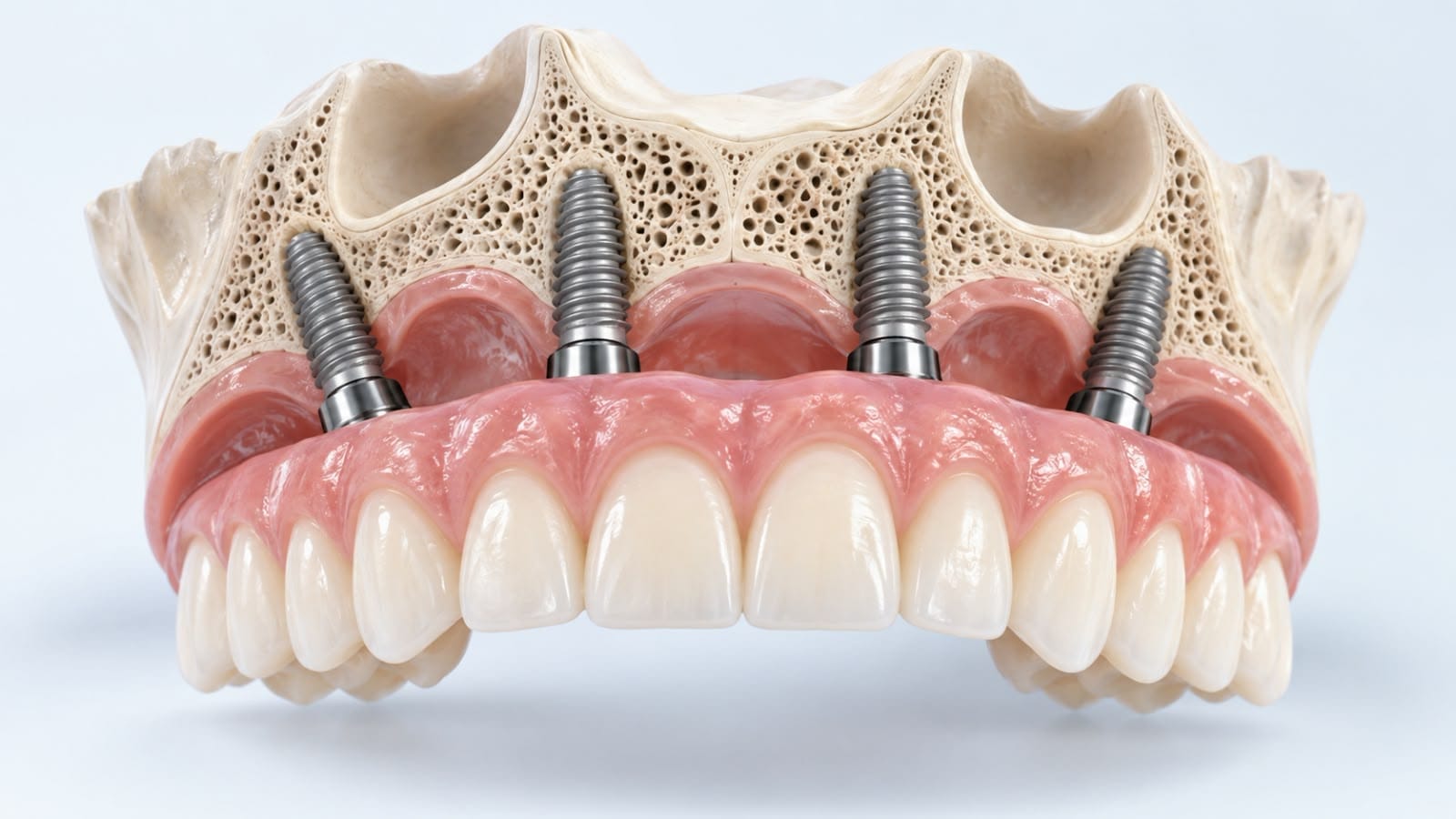
Patients who have lost most or all of their teeth—or whose remaining teeth cannot be predictably restored—often want an alternative to a conventional removable denture. The All-on-4® treatment concept uses four strategically positioned dental implants to support a complete fixed arch of replacement teeth. For suitable patients, it can restore the upper jaw, lower jaw, or both arches with fewer im