All-on-4® Dental Implants in Costa Rica: Cost, Procedure, Recovery, and What to Know
Patients who have lost most or all of their teeth—or whose remaining teeth cannot be predictably restored—often want an alternative to a conventional removable denture.
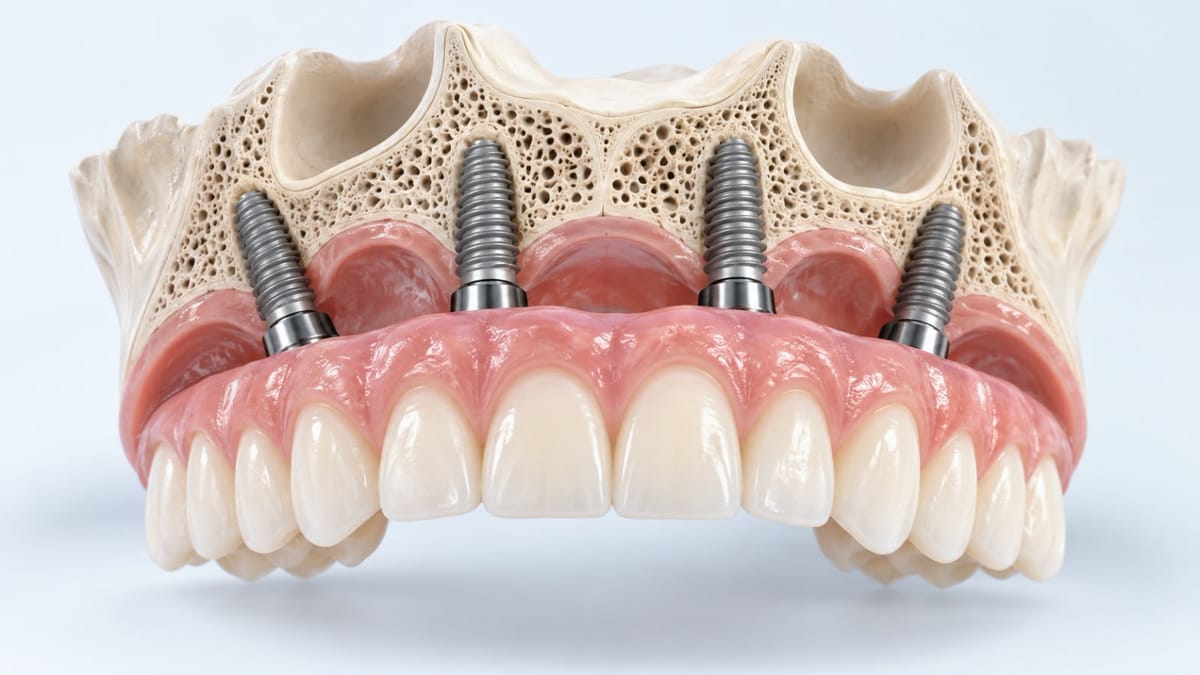
The All-on-4® treatment concept uses four strategically positioned dental implants to support a complete fixed arch of replacement teeth. For suitable patients, it can restore the upper jaw, lower jaw, or both arches with fewer implants than traditional approaches that place an implant for each missing tooth.
Traveling for All-on-4 dental implants in Costa Rica may also reduce treatment costs compared with the United States or Canada. However, full-arch implant treatment is complex. The most important questions are not simply “How much does it cost?” or “Can I receive teeth in one day?” Patients should understand candidacy, implant stability, temporary teeth, healing, final materials, maintenance, and what happens if one implant develops a complication.
At Esthetic Dent, every full-arch case begins with diagnostic, surgical, restorative, and laboratory planning. This guide explains what patients should know before traveling.
What Does All-on-4® Mean?
All-on-4® is a full-arch treatment concept developed and registered by Nobel Biocare. It generally uses:
- Two implants positioned more vertically in the front of the jaw
- Two posterior implants placed at an angle to maximize available bone and avoid certain anatomical structures
- A complete provisional or final arch of replacement teeth supported by the four implants
The angled posterior implants may reduce the need for bone grafting in selected cases, but All-on-4® should not be described as universally graft-free. Bone volume, anatomy, implant stability, and restorative needs vary.
Immediate fixed temporary teeth may be possible on the day of surgery when the implants achieve sufficient primary stability and the clinical conditions meet immediate-loading criteria.
Trademark notice: All-on-4® is a registered trademark of Nobel Biocare. “All-on-X” is used more generally to describe full-arch treatment supported by a clinically selected number of implants.
What Is a Dental Implant?
A dental implant is a biocompatible fixture placed surgically in the jawbone to replace tooth-root support. Bone heals around the implant through a process called osseointegration.
In a full-arch restoration, several implants work together to support a complete set of replacement teeth. The treatment normally includes:
- Implant fixtures in the jawbone
- Multi-unit abutments or other restorative components
- A temporary full-arch prosthesis during healing
- A final full-arch prosthesis after integration
The implant fixtures, abutments, screws, temporary teeth, and final prosthesis are separate components. Patients should confirm which components and materials are included in every quote.
Who May Be a Candidate for All-on-4®?
All-on-4® or another All-on-X design may be considered for patients who:
- Have lost all teeth in one or both jaws
- Have extensive failing teeth that cannot predictably be saved
- Use removable dentures and want greater stability
- Have sufficient bone in appropriate areas for four implants
- Can maintain daily hygiene under a full-arch prosthesis
- Have medical conditions that are appropriately controlled
- Understand that treatment usually requires two trips
- Can follow a soft-food diet and recovery instructions
- Are committed to long-term professional maintenance
Age alone does not determine candidacy. Bone, gums, health, medications, smoking, bite forces, hygiene ability, and restorative space are more important.
When Might Four Implants Not Be the Best Choice?
Four implants may not provide the preferred support or redundancy for every patient.
A different design may be recommended when:
- Bone quality or distribution does not support the planned positions
- Bite forces are high
- The arch shape or restorative space requires another approach
- The patient has severe grinding or clenching
- A longer arch or heavier prosthesis needs additional support
- The clinical team wants greater implant distribution
- Hygiene access or prosthetic design favors another solution
Depending on the case, Esthetic Dent may recommend All-on-5, All-on-6, All-on-8, an implant-retained removable prosthesis, grafting, or another individualized plan.
The number of implants should be determined by diagnosis—not by selecting a package name before evaluation.
All-on-4 vs. All-on-6: What Is the Difference?
| Consideration | All-on-4 | All-on-6 |
|---|---|---|
| Number of implants | Four per arch | Six per arch |
| Distribution | Two anterior and two posterior supports in the classic concept | Additional support points across the arch |
| Bone requirements | May maximize available bone with tilted posterior implants | Requires suitable bone for six planned positions |
| Redundancy | Less support remains if one implant is lost | More implants may provide additional distribution, depending on design |
| Surgery and cost | Usually fewer implants and components | Usually higher surgical and component cost |
| Best choice | Depends on anatomy, bite, prosthesis, and risk | Depends on anatomy, bite, prosthesis, and risk |
More implants do not automatically mean a better result, and fewer implants do not automatically mean an inferior result. Position, stability, prosthetic design, hygiene, and patient factors matter as much as the number.
What Are the Benefits of All-on-4® Treatment?
Fixed temporary teeth may be possible
Patients who meet immediate-loading criteria may receive a fixed provisional restoration after implant placement. This means they do not have to remain without teeth during healing.
The temporary teeth are not the final restoration and must be protected with a prescribed soft-food diet.
Greater stability than a conventional denture
The prosthesis is supported by implants rather than resting only on the gums. This can reduce movement and improve confidence while eating and speaking.
One arch can be supported by four implants
The design replaces a complete arch without placing one implant for every missing tooth, potentially reducing surgery and cost.
Available bone may be used more efficiently
Angled posterior implants may help avoid certain anatomical structures and use existing bone more effectively in suitable cases.
Implants help stimulate surrounding bone
Integrated implants transmit functional forces to the bone. This can help maintain bone around the implant sites, although it does not guarantee that all future bone loss will be prevented.
Treatment can restore facial and smile support
A properly designed full-arch prosthesis restores tooth display, smile proportions, lip support, and chewing surfaces. The final design must balance aesthetics with hygiene and function.
What Are the Limitations and Risks?
All-on-4® is major surgical and restorative treatment. Possible risks and limitations include:
- Infection
- Implant failure or lack of integration
- Delayed healing
- Nerve or sinus complications
- Bone or gum loss around implants
- Difficulty cleaning beneath the prosthesis
- Fracture or wear of temporary teeth
- Loosening or wear of screws and components
- Chipping, fracture, or repair of the final prosthesis
- Bite adjustments
- Need for additional surgery
- Effect of one implant complication on the support of the entire arch
Smoking, uncontrolled diabetes, untreated gum disease, poor hygiene, grinding, certain medications, and failure to follow dietary and maintenance instructions may increase risk.
No clinic should guarantee same-day temporary teeth, a complication-free recovery, or lifetime clinical success for every patient.
The All-on-4® Procedure at Esthetic Dent
Full-arch implant treatment generally takes place in two trips separated by a healing period.
First Trip: Diagnosis, Surgery, and Temporary Teeth
1. Free initial case review
Start through the website form, WhatsApp, international telephone number, or email. You do not need confirmed travel dates, photographs, or X-rays before speaking with a Dental Advisor.
Existing scans, photographs, or treatment plans are helpful when available and may support a preliminary estimate.
2. Complete diagnostic consultation
After arrival, the team performs the definitive evaluation, which may include:
- Medical and dental history
- Clinical examination
- Gum assessment
- Digital X-rays
- CBCT or 3D dental tomography
- Digital intraoral scans
- Photographs
- Bite and restorative-space evaluation
- Surgical and restorative specialist review
Esthetic Dent's complete diagnostic consultation costs $250 and is included in international treatment packages.
3. Digital surgical and prosthetic planning
The final tooth position is planned before the implant position. The team evaluates implant number, location, angulation, bone, temporary teeth, bite, hygiene access, and final material.
The plan may confirm All-on-4 or recommend another All-on-X configuration.
4. Extractions and implant placement
Teeth that cannot be saved are removed when indicated. Diseased tissue is treated, and the implants are positioned according to the approved plan.
Local anesthesia is used. IV sedation with a licensed anesthesiologist is available when clinically appropriate, but it must be coordinated in advance and is charged separately; it is not included in the dental package.
5. Immediate temporary teeth when criteria are met
If the implants achieve sufficient stability and the bite and other clinical conditions allow, a fixed temporary prosthesis may be delivered after surgery.
When immediate loading is not appropriate, the team explains the safest temporary option. Protecting implant integration is more important than making a same-day promise.
6. Post-operative checks
The team evaluates healing, comfort, bite, hygiene, temporary teeth, medications, and recovery instructions before the patient travels home.
Dental implant placement generally requires approximately four business days. Arrival and departure days are added separately, and the Dental Advisor confirms the individual schedule before flights are booked.
Healing Period: Osseointegration
The implants heal and integrate with the jawbone over the following months. The general estimate is approximately six months, but the exact timeline depends on:
- Implant stability
- Bone quality
- Upper or lower jaw
- Grafting or additional surgery
- Medical conditions
- Smoking
- Healing progress
- Clinical protocol
During this period, the temporary prosthesis is used according to the team's instructions. Patients must follow dietary restrictions, clean beneath the prosthesis, attend required maintenance, and report looseness, breakage, pain, swelling, or bite changes.
Esthetic Dent follows up while the patient heals and prepares for the second trip.
Second Trip: Final Full-Arch Restoration
After integration is confirmed, the restorative phase may include:
- Clinical and implant evaluation
- Digital scans or other prosthetic records
- Bite records
- Digital design
- Try-ins
- Evaluation of tooth position, speech, smile, and facial support
- Final prosthesis fabrication
- Placement and screw-tightening protocol
- Bite adjustment
- Hygiene instruction and final review
Because a full arch involves six or more restorative units, the restorative trip generally requires approximately nine business days. Arrival and departure days are added separately.
What Materials Are Used for the Final Teeth?
The final prosthesis may be made from zirconia, resin-based materials, or another clinically appropriate design. Material selection depends on:
- Bite forces
- Opposing teeth or prosthesis
- Available restorative space
- Implant distribution
- Aesthetic goals
- Weight and design of the prosthesis
- Repair and maintenance considerations
- Budget
The written treatment plan should identify the proposed final material. Patients should not assume that every advertised package includes monolithic zirconia unless it is specifically documented.
Esthetic Dent's in-house dental laboratory technicians work directly with the dentists on design, production, try-ins, shade, fit, and adjustments.
How Much Does All-on-4 Cost in Costa Rica?
Esthetic Dent's approved All-on-X starting prices are:
| Treatment | Starting price |
|---|---|
| All-on-X, single arch | From $10,480 |
| All-on-X, upper and lower arches | From $17,775 |
Prices shown are starting package prices. The final quote is confirmed after case review and diagnostic evaluation.
The total cost depends on:
- One arch or both arches
- Number of implants
- Implant system
- Extractions
- Bone grafting or other surgery
- Sedation
- Temporary prosthesis
- Final material
- Restorative complexity
- Additional medical or diagnostic requirements
A true comparison must include the implant fixtures, abutments, temporary teeth, final prosthesis, diagnostics, surgery, laboratory work, and any required additional procedures.
How Much Can Patients Save in Costa Rica?
Patients may save up to 70% on many dental treatments because operating costs in Costa Rica are lower than in the United States or Canada.
Actual savings depend on the complete treatment plan, travel, lodging, number of trips, materials, and package inclusions. The lowest advertised price is not automatically the best value.
Request an itemized written quote and compare equivalent treatment plans.
What Is Included in the All-on-X Package?
Package inclusions depend on the final approved package and treatment location. The written quote should identify:
- Surgical and restorative procedures included
- Number and brand of implants
- Temporary prosthesis
- Final prosthesis and material
- Diagnostic consultation
- Transportation
- Domestic flight for applicable beach packages
- Travel coordination
- Warranty terms
- Items billed separately
IV sedation is billed separately. International airfare and lodging should be considered separate unless the written package expressly includes them.
San José or the Beach: Where Can Treatment Take Place?
International patients may receive care in San José or choose the Cóbano and Santa Teresa experience according to the treatment plan and package.
For applicable beach packages, the domestic flight between San José and Cóbano is included and coordinated through Costa Rica Green Airways. Choosing San José instead does not create a cash refund or discount for the domestic flight included only in the beach package.
The clinical schedule and recovery instructions take priority in either location. Swimming, sun exposure, alcohol, exercise, and excursions must be approved after surgery.
Recovery After All-on-4® Surgery
Common short-term effects may include swelling, bruising, soreness, fatigue, and minor bleeding. The extent varies by patient and procedure.
Follow instructions regarding:
- Medications
- Cold compresses when recommended
- Oral hygiene
- Soft-food diet
- Hydration
- Physical activity
- Sleeping position
- Tobacco and alcohol avoidance
- Follow-up appointments
Contact the clinic promptly for persistent bleeding, fever, worsening swelling, uncontrolled pain, difficulty breathing, a loose temporary prosthesis, or another concerning symptom.
What Can You Eat with Temporary All-on-4 Teeth?
Temporary fixed teeth are designed to protect the implants and maintain appearance during healing. They are not intended for unrestricted chewing.
Patients generally follow a soft-food diet and avoid hard, crunchy, sticky, or chewy foods. Even if the temporary teeth feel stable, excessive force can interfere with healing or damage the prosthesis.
The clinical team provides an individualized diet and progression plan.
How Do You Clean an All-on-4® Restoration?
A full-arch prosthesis does not develop cavities, but plaque can accumulate around implants and beneath the bridge.
Care may include:
- Brushing the prosthesis and gumline
- Cleaning beneath the bridge
- Super floss or implant-specific floss
- Interdental brushes
- A water flosser
- Professional implant maintenance
- Periodic clinical and radiographic review
Bleeding, swelling, persistent bad taste, difficulty cleaning, mobility, or bite changes should be reported.
All-on-4® Warranty at Esthetic Dent
Esthetic Dent provides a lifetime guarantee on dental implants and restorations according to its complete written warranty.
Coverage depends on hygiene, professional maintenance, follow-up, dietary and protective instructions, control of grinding, and other documented conditions. The warranty is not a statement that complications cannot occur.
Why Choose Esthetic Dent for All-on-X Treatment?
Patients benefit from:
- More than 35 years caring for local and international patients
- Eight full-time dental specialists
- A maxillofacial surgeon on staff
- Surgical and restorative planning within one team
- CBCT imaging and digital intraoral scans
- Recognized implant systems
- An in-house dental laboratory with 12 technicians
- Temporary and final prosthetic coordination
- Written treatment planning and pricing
- A lifetime guarantee according to written terms
- HIPAA-compliant records and secure file transfer
- A Dental Advisor and Travel Coordinator
- Follow-up during healing and after final treatment
Request Free Advice and a Preliminary Estimate
You do not need confirmed travel dates, photographs, or X-rays before contacting Esthetic Dent.
Begin through the website form, WhatsApp, international telephone number, or email. A Dental Advisor can explain the process, request helpful records when available, coordinate a specialist review, and prepare the next steps.
The definitive All-on-4 or All-on-X recommendation is confirmed after in-person diagnostic evaluation.
Frequently Asked Questions About All-on-4® Dental Implants
What does All-on-4® mean?
All-on-4® is Nobel Biocare's registered full-arch treatment concept using four implants—typically two anterior and two tilted posterior implants—to support a complete arch of replacement teeth.
Can I receive fixed teeth on the day of surgery?
Fixed temporary teeth may be delivered when the implants achieve sufficient primary stability and the clinical conditions meet immediate-loading criteria. It cannot be guaranteed before surgery.
How many trips to Costa Rica are required?
Most patients require two trips: the first for diagnosis, implant placement, and temporary teeth when appropriate; the second after healing for the final full-arch restoration.
How long is the healing period?
The general estimate is approximately six months, but the exact period depends on bone, stability, jaw, additional procedures, health, and healing progress.
Is All-on-4® better than All-on-6?
Not universally. All-on-4 uses fewer implants and may maximize available bone, while All-on-6 adds support points and may improve force distribution or redundancy in selected cases. The best design depends on anatomy, bite, prosthesis, hygiene, and risk.
Is bone grafting always avoided with All-on-4®?
No. The angled posterior implants may reduce the need for grafting in selected cases, but anatomy and treatment goals vary. Diagnostic imaging determines whether grafting or another design is required.
Is All-on-4® painful?
Local anesthesia is used, and IV sedation is available when scheduled separately. Swelling, soreness, bruising, and temporary discomfort may occur after surgery. The team provides medication and recovery instructions based on the individual case.
What happens if one of the four implants fails?
The effect depends on timing, position, bone, prosthesis, and healing. Because four implants support the entire arch, a complication may require modification of the temporary restoration, additional healing, replacement of an implant, or a revised design. The team explains the options for the individual situation.
How long does an All-on-4® restoration last?
Implants and full-arch prostheses can function for many years with appropriate planning and care, but components may need adjustment, repair, or replacement. Hygiene, maintenance, smoking, medical conditions, grinding, bite, and materials affect longevity.
How much does All-on-4 cost at Esthetic Dent?
All-on-X treatment starts at $10,480 for one arch and $17,775 for upper and lower arches. The final written quote is confirmed after diagnostic evaluation and depends on the complete case and package.
Keep reading
Dental Implants for People With Diabetes: What You Need to Know
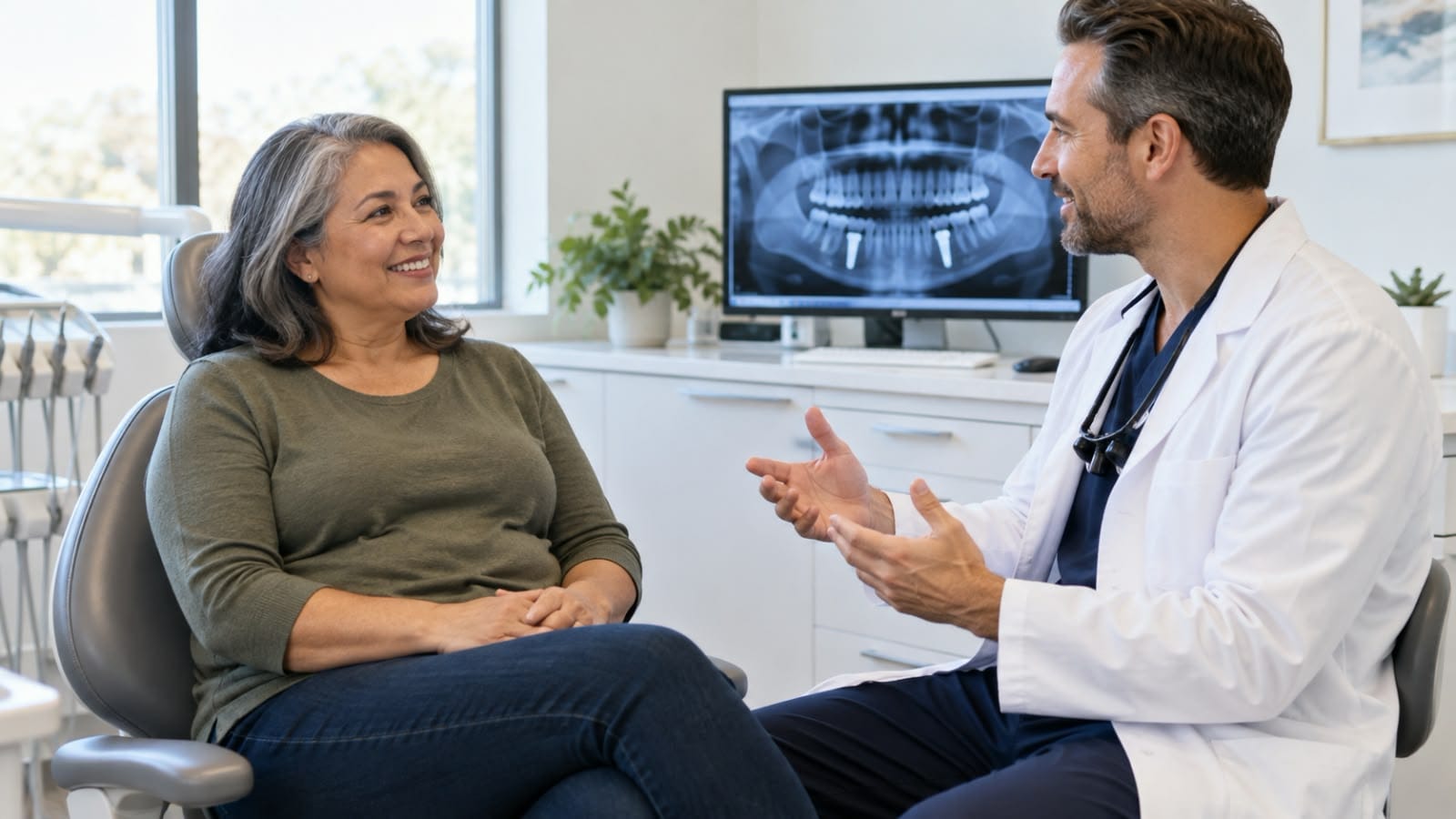
Having diabetes does not automatically prevent you from receiving dental implants. Many people with well-managed diabetes can be considered for implant treatment after an individualized clinical and medical evaluation. What matters most is not the diagnosis alone. Your current glucose control, gum and bone health, medications, healing history, smoking status, nutrition, and other medical conditio
Titanium vs. Zirconia Dental Implants: Which Is the Better Choice?
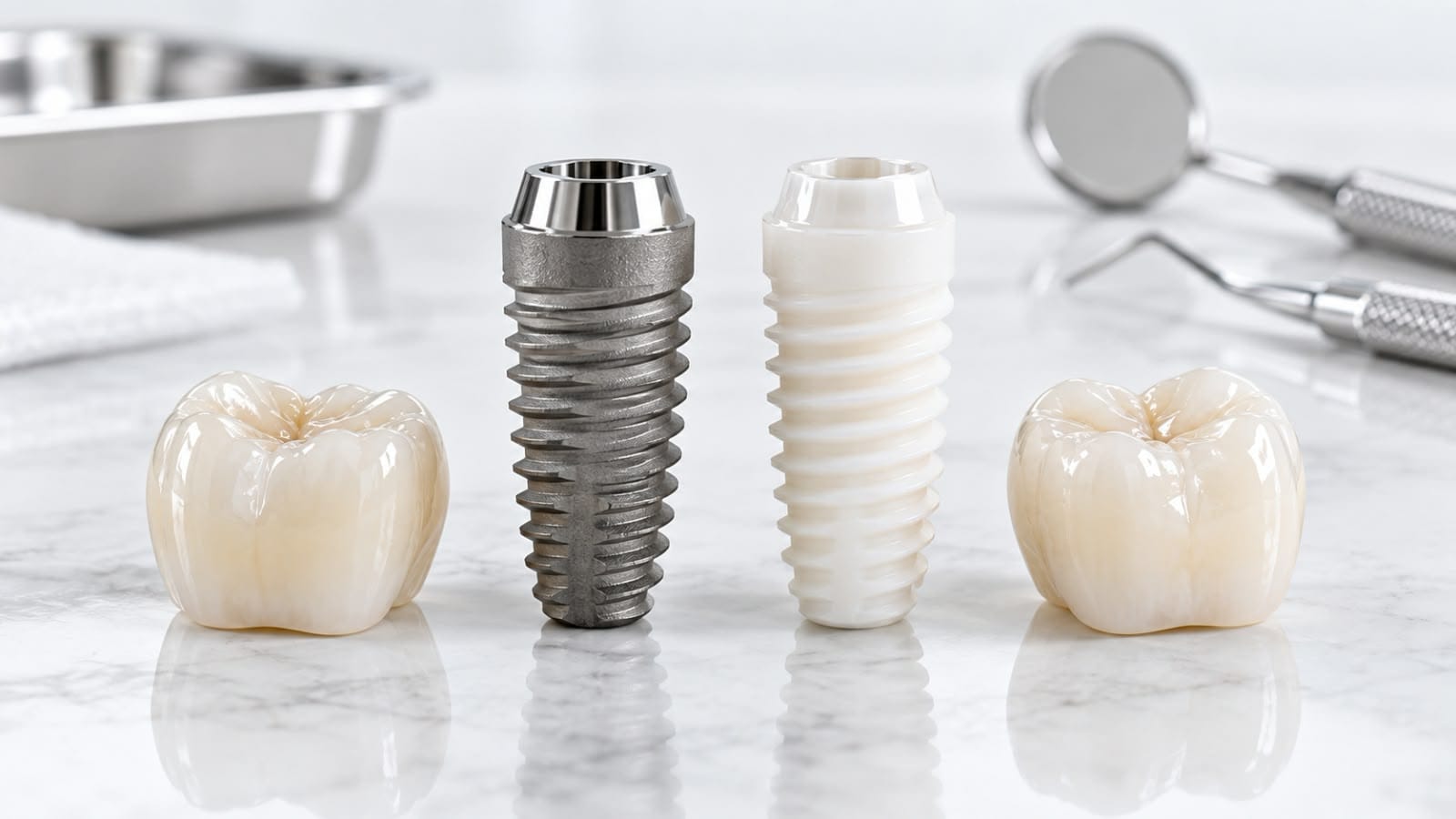
Dental implants can replace missing teeth with a fixed foundation designed to integrate with the jawbone. Most implant systems are made from titanium or zirconium oxide, commonly called zirconia. Both materials are biocompatible and used in dentistry, but they do not have the same clinical history, design flexibility, or volume of long-term evidence.For most patients and for many complex restorati

Blood Thinners and Dental Treatment: What You Need to Know Before You Travel
If you take a blood thinner and are planning dental treatment, you may be concerned about bleeding during or after your procedure. In many cases, taking this type of medication does not prevent you from receiving dental care. It simply means that your dentist needs accurate medical information and enough time to plan safely.Most important: Never stop, skip, delay, or change a prescribed blood thin