Dental Treatment Recovery: What to Expect and How to Support Healing

Having a dental procedure can feel intimidating, especially when you are traveling for care and do not know exactly how you will feel afterward.Recovery is not the same for every patient or procedure. A crown, veneer, or filling may cause brief sensitivity, while extractions, implant placement, bone grafting, sinus surgery, or full-arch treatment require more structured healing and activity restrictions.The safest approach is to understand what is expected, prepare before treatment, follow the written instructions, attend every required check, and contact the clinic when something does not feel right.This guide provides general education. The instructions issued by your dentist, surgeon, physician, and anesthesiologist always take priority, because your treatment, medications, health, and recovery needs are individual.
Recovery Begins Before the Procedure
Good preparation can make the first days easier and reduce avoidable problems.Before treatment:
- Provide a complete list of medications, supplements, allergies, and medical conditions.
- Tell the team about previous reactions to anesthesia or dental treatment.
- Ask whether medical clearance is required.
- Fill approved prescriptions or receive the medications provided for the procedure.
- Purchase soft foods and fluids appropriate for the planned treatment.
- Arrange transportation and supervision if sedation will be used.
- Keep the clinic's contact information available.
- Confirm the date and time of follow-up appointments.
- Review what activities, foods, and oral-care products must be avoided.
Never stop aspirin, anticoagulants, diabetes medication, blood-pressure medication, or another prescription on your own. The prescribing healthcare professional and dental team must coordinate any medication change.
What Can You Expect After Dental Treatment?
The experience depends on the procedure.
|
|
|
|
|
|
|
|
|
|
|
|
|
|
|
|
|
|
|
|
|
These are general patterns, not promises or diagnostic rules. Some patients experience little discomfort, while others require more time and support.
The Rest of the Treatment Day
After surgery or extraction, plan to rest for the remainder of the day unless your clinician gives different instructions.Avoid:· Strenuous exercise· Heavy lifting· Repeated bending· Swimming or surfing· Long excursions· Alcohol· Smoking or vaping· Driving after sedation· Activities that could cause injury while numb or medicatedPhysical effort can increase bleeding, throbbing, swelling, and discomfort. Resume normal activity gradually and only according to the treatment instructions.
If You Received Sedation
Sedation can temporarily affect judgment, coordination, memory, and reaction time.Follow the anesthesiologist's instructions, which commonly include:· Leaving with a responsible adult· Not driving or operating machinery· Not drinking alcohol· Not making important legal or financial decisions· Taking only approved medications· Remaining supervised for the recommended periodEsthetic Dent can coordinate the transportation included in the applicable package or help clarify other transportation arrangements. A taxi or rideshare is not always a substitute for the responsible adult required after sedation.
How Should You Sleep After Dental Surgery?
The clinical team may recommend sleeping with the head elevated during early recovery to help manage swelling and throbbing.You may be advised to:· Use extra pillows or a recliner· Avoid sleeping directly on a swollen side· Protect bedding from minor drainage· Keep medication instructions and contact information nearbyPatients with sleep apnea or a CPAP device should discuss post-operative use with the surgical and anesthesia teams before treatment.
How to Use Cold Packs Safely
Cold packs may be recommended after oral surgery to help manage swelling and bruising.Use them only according to the clinic's instructions:· Place a cloth between the cold pack and skin.· Apply intermittently rather than continuously.· Do not fall asleep with ice against the face.· Do not apply excessive pressure over the surgical area.· Follow the recommended time period for your procedure.Swelling commonly increases during the first few days before it begins to improve. It should not be promised to disappear after one day.Contact the clinic if swelling is worsening beyond the expected period, becomes hard or rapidly enlarging, is accompanied by fever or drainage, or affects breathing or swallowing.
What to Do About Bleeding
Minor oozing or blood-tinged saliva can occur after an extraction or surgery.The surgical team may provide gauze and instructions about placement, pressure, and replacement. Follow those instructions rather than changing gauze continuously, which can disturb the developing clot.To protect clot formation:· Avoid forceful rinsing or spitting.· Do not use straws.· Avoid smoking and vaping.· Avoid strenuous activity.· Do not disturb the site with fingers or tongue.· Keep the head elevated when instructed.Contact the clinic if bleeding does not respond to the measures you were given. Seek urgent medical care for uncontrolled or heavy bleeding, dizziness, fainting, breathing difficulty, or another emergency.
Do Not Stop Aspirin or Blood Thinners on Your Own
The original reason for aspirin, warfarin, apixaban, rivaroxaban, clopidogrel, or another anticoagulant or antiplatelet medication may involve prevention of a serious medical event.Stopping it without professional guidance can be dangerous.Before treatment:1. Tell Esthetic Dent the exact medication and dose.2. Identify the healthcare professional who prescribed it.3. Follow the coordinated plan from the prescribing professional and dental team.4. Do not change the dose or timing unless specifically instructed.
What Can You Eat During Dental Recovery?
The correct diet depends on the procedure.
After restorative treatment
Wait until numbness has resolved before chewing to avoid biting the lip, cheek, or tongue. Follow instructions for temporary crowns, veneers, bridges, or bonding.
After extraction or oral surgery
Begin with foods and fluids approved by the surgical team. Suitable choices may include:· Smooth yogurt· Applesauce· Mashed potatoes· Puréed soup that is not hot· Scrambled eggs· Oatmeal after cooling· Smoothies eaten with a spoon· Protein drinks taken without a straw· Mashed avocado· Soft fish
Foods to avoid during early healing
Depending on the procedure, avoid:· Very hot food or drinks· Hard or crunchy foods· Nuts, popcorn, seeds, and granola· Spicy or highly acidic foods if they irritate tissues· Sticky or chewy foods· Alcohol· Foods that require forceful biting· Straws or other suctionDo not use a rigid three-day rule for every procedure. Your clinician determines when foods and habits can safely be reintroduced.
Stay Hydrated and Protect Nutrition
Hydration and adequate nutrition support recovery. Take small, frequent amounts if nausea or soreness makes eating difficult.Patients with diabetes, kidney disease, food allergies, swallowing concerns, or another medical condition may need a customized food plan.Contact the team if you cannot keep fluids down, cannot take required medication, or are unable to eat enough to manage a health condition.
How to Care for the Mouth After Treatment
Oral hygiene remains important, but technique may need to change temporarily.
After fillings, crowns, bridges, or veneers
Continue brushing and flossing as instructed. Be careful around temporary restorations, and ask how to remove floss without dislodging them.
After extraction or surgery
Follow the staged plan given by the surgeon. It may include:· Avoiding direct brushing over a fresh incision at first· Gentle brushing of unaffected areas· Warm saltwater rinses when approved· A prescribed antimicrobial rinse when indicated· Gradual introduction of cleaning around implants or bridgesDo not automatically use alcohol-containing mouthwash, an electric toothbrush, or a water flosser over a fresh surgical site.
How Should Pain Medication Be Used?
Take medication exactly as prescribed or recommended.· Do not take more than the stated dose.· Check combination products for duplicate ingredients.· Do not mix medication with alcohol.· Do not take another person's prescription.· Ask before adding over-the-counter pain relievers.· Store medication securely.· Report suspected allergic reactions or serious side effects.Pain should generally become more manageable as healing progresses. Sudden or increasing pain after initial improvement should be reported.
What About Antibiotics?
Antibiotics are not required after every dental procedure. When prescribed:· Take them according to the schedule.· Do not save them for another illness.· Do not share them.· Follow instructions about completing the course.· Contact the team for rash, breathing difficulty, severe diarrhea, or another suspected reaction.Difficulty breathing, facial or throat swelling, or a severe allergic reaction requires emergency medical care.
Smoking, Vaping, Marijuana, and Alcohol
Smoking, vaping, nicotine, and marijuana smoke can reduce blood flow and impair healing. They may increase infection and implant complications.Avoid them before and after surgery according to the treatment plan. Long-term tobacco avoidance provides the best protection for gums, implants, and overall health.Avoid alcohol until the clinical team approves it and all medication and sedation restrictions have ended.
When Can You Return to Exercise?
The timeline depends on the procedure, bleeding, swelling, medications, and overall health.Resume activity gradually after the clinician approves it. Stop and contact the team if activity triggers fresh bleeding, increased throbbing, swelling, dizziness, or pain.Do not prioritize sightseeing or vacation activities over treatment recovery.
Special Instructions After Bone Grafting or Sinus Surgery
Patients who receive grafting or sinus-related treatment may have additional restrictions.These may address:· Nose blowing· Sneezing with the mouth open· Air-pressure changes· Straws and suction· Physical exertion· CPAP use· Congestion medication· Flying or other travel timingDo not apply generic internet advice. Follow the procedure-specific written instructions.
Recovery After Crowns, Bridges, and Veneers
Restorative care may involve temporary sensitivity or gum tenderness.Contact the clinic if:· The bite feels high or uneven· A temporary or final restoration feels loose· There is persistent or increasing pain· Floss catches or shreds repeatedly· A restoration chips or fractures· Swelling develops· Sensitivity does not follow the pattern explained by the dentistAn uneven bite should be adjusted rather than ignored because repeated force can affect the tooth, restoration, jaw, or implant underneath.
Recovery After Dental Implant Placement
Implants need time to integrate with the jawbone even when the gums feel comfortable.Protect healing by:· Following the prescribed diet· Cleaning according to the staged instructions· Avoiding tobacco· Attending post-operative checks· Reporting mobility or bite changes· Protecting temporary restorations· Returning for the final restoration only after integration is confirmedThe general healing estimate is often approximately six months, but the exact timing varies.
What Symptoms May Be Expected?
Depending on the procedure, expected short-term symptoms may include:· Mild oozing· Swelling· Bruising· Soreness· Temporary sensitivity· Jaw stiffness· Fatigue· Awareness of a new restorationThe team should explain the expected pattern for your treatment. A symptom can be common and still need evaluation if it is severe, prolonged, worsening, or different from what was discussed.
Warning Signs: When Should You Contact the Clinic?
Contact Esthetic Dent promptly for:· Bleeding that does not respond to the instructed measures· Fever or chills· Increasing swelling after the expected early period· Worsening pain after initial improvement· Pus, persistent bad taste, or drainage· A loose implant, tooth, temporary bridge, crown, or other restoration· A cracked or broken restoration· A bite that feels significantly uneven· New or worsening numbness· Inability to eat, drink, or take medication· Persistent vomiting· Suspected medication reactionSeek emergency medical care immediately for:· Difficulty breathing or swallowing· Chest pain· Loss of consciousness· Severe allergic reaction· Uncontrolled heavy bleeding· Rapidly expanding facial or neck swelling· Another potentially life-threatening symptom
Why Follow-Up Appointments Matter
Follow-up allows the team to evaluate:· Healing· Infection or inflammation· Sutures· Bite· Temporary restorations· Implant stability when appropriate· Hygiene technique· Diet progression· Medication response· Readiness for the next treatment phaseDo not skip follow-up to make room for sightseeing or an earlier flight.The Dental Advisor confirms the treatment and departure schedule before travel is booked.
Follow-Up After Returning Home
Esthetic Dent follows up with patients during recovery, between implant phases, and after final treatment.Patients may communicate securely through the process established by the clinic. Esthetic Dent is HIPAA compliant, and patient records and clinical images are handled and transferred through secure, HIPAA-compliant processes.Some concerns can be reviewed remotely, while others require an in-person examination by a local dentist or Esthetic Dent.An emergency should not be delayed while waiting for a remote response.
What Should International Patients Keep with Them?
Before traveling home, confirm that you have:· Written aftercare instructions· Medication directions· The clinic's contact information· Follow-up schedule· Implant and component records when applicable· Copies of relevant clinical records· Warranty and maintenance information· Instructions for temporary restorations· Information about warning signs
How Long Should You Stay in Costa Rica?
The general clinical scheduling guidelines are:· Dental implant placement requires approximately four business days.· Restorative treatment involving one to five units requires approximately five business days.· Restorative treatment involving six or more units requires approximately nine business days.· Arrival and departure days are added separately.Your Dental Advisor confirms the individual schedule before flights are purchased.
Contact Esthetic Dent with Recovery Questions
If you are uncertain about pain, swelling, bleeding, diet, medication, hygiene, activity, or a restoration, ask the team rather than relying on generic advice.Contact Esthetic Dent through the process provided by your Dental Advisor. The team remains involved while you recover and after treatment has been completed.
Frequently Asked Questions About Dental Treatment Recovery
How long does recovery take after dental treatment?
It depends on the procedure and patient. Sensitivity after restorative care may be brief, while surgical tissue healing and implant integration take longer. Your clinician will explain the expected stages and when normal activity can resume.
Is dental treatment recovery painful?
Some procedures cause little discomfort, while surgery may cause soreness, swelling, bruising, or jaw stiffness. Medication and aftercare can help, but pain varies. Increasing or severe pain should be reported.
Can I exercise after dental surgery?
Avoid strenuous activity during the early recovery period. Resume gradually only after the surgical team approves it. Activity that causes bleeding, throbbing, swelling, or dizziness should be stopped.
Should I stop aspirin before oral surgery?
Never stop aspirin, anticoagulants, or another prescribed medication without coordinated instructions from the prescribing healthcare professional and dental team.
How long should I use ice for swelling?
Use cold packs only according to the instructions for your procedure. Application intervals and duration vary. Do not apply ice directly to the skin or use it continuously.
Is swelling after dental surgery normal?
Some swelling is common and may increase during the first few days before improving. Contact the clinic if it worsens beyond the expected period, is associated with fever or drainage, or affects breathing or swallowing.
What can I eat after oral surgery?
Choose the liquids and soft foods approved by the surgical team. Avoid hard, crunchy, sticky, spicy, and very hot foods when instructed. Do not use a straw until approved.
Can I go sightseeing after dental treatment?
Calm activities may be possible depending on the procedure and how you feel, but recovery and follow-up come first. Surgery may restrict sun exposure, swimming, alcohol, exercise, and long excursions.
What if I have a problem after returning home?
Contact Esthetic Dent promptly. The team will review the information and coordinate next steps. Some concerns require an in-person local examination or urgent medical care.
Keep reading
Post-Operative Care After All-on-4® Surgery: Diet, Cleaning, Recovery, and Warning Signs
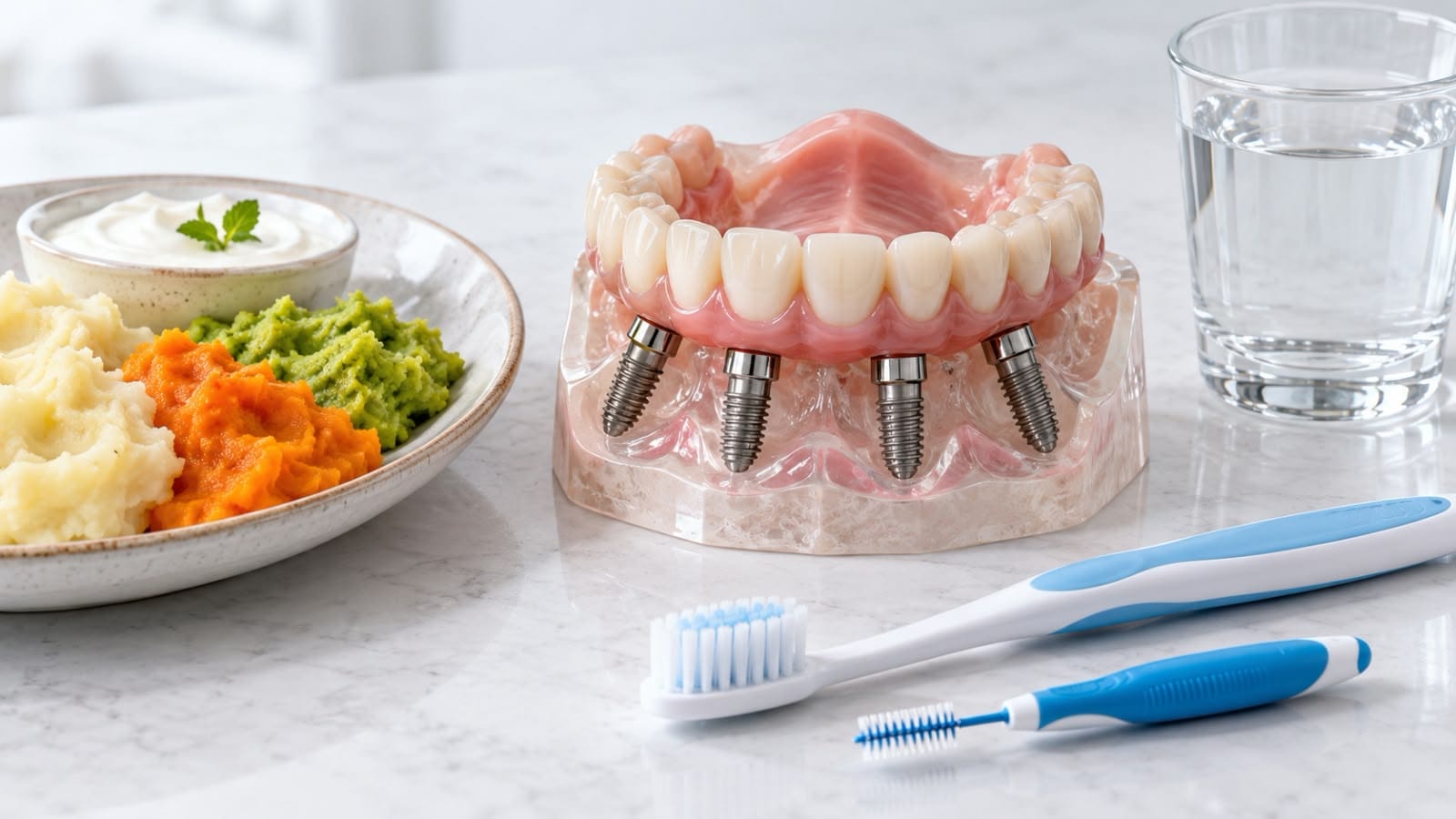
Your new temporary All-on-4® bridge may feel stable immediately after surgery, but the implants underneath are still healing.Think of the temporary bridge like a protective cast over a healing bone. A cast provides support, but you would not place full weight on a broken arm before the bone has healed. In the same way, fixed temporary teeth must be protected from excessive chewing forces while the