Post-Operative Care After All-on-4® Surgery: Diet, Cleaning, Recovery, and Warning Signs
Your new temporary All-on-4® bridge may feel stable immediately after surgery, but the implants underneath are still healing.Think of the temporary bridge like a protective cast over a healing bone. A cast provides support, but you would not place full weight on a broken arm before the bone has healed. In the same way, fixed temporary teeth must be protected from excessive chewing forces while the implants integrate with the jawbone.Post-operative care is not only about preventing the bridge from breaking. It also supports clot formation, gum healing, implant stability, infection control, comfort, and long-term treatment success.This guide provides general education for patients recovering after full-arch implant surgery. Your surgeon's written instructions always take priority, because extractions, grafting, implant stability, sedation, medications, and medical conditions vary by patient.Trademark notice: All-on-4® is a registered trademark of Nobel Biocare. “All-on-X” is used more generally for full-arch treatment supported by a clinically selected number of implants.
What Is Healing After All-on-4® Surgery?
All-on-4 treatment commonly includes two different types of healing:
Soft-tissue healing
The gums and surgical incisions begin to close and mature after surgery. Swelling, bruising, soreness, and minor bleeding may occur during the early period.
Osseointegration
Bone gradually heals around the implant surfaces and provides long-term stability. This process takes several months and is often estimated at approximately six months, although the timeline varies.A patient may feel comfortable before osseointegration is complete. Feeling better does not mean the implants are ready for unrestricted chewing.
Temporary Teeth Are Not Final Teeth
The fixed provisional bridge is designed to:· Maintain appearance· Support speech· Protect the surgical plan· Provide limited function during healing· Help evaluate tooth position, bite, and aestheticsIt is not designed for the same forces as the final prosthesis. Excessive pressure can fracture the temporary teeth, loosen a screw, overload an implant, or disturb healing.Protecting the temporary bridge is part of protecting the implants underneath it.
The First 24 Hours After Surgery
Follow the individualized discharge instructions provided by the surgical and anesthesia teams.General priorities may include:· Resting with the head elevated· Taking medications exactly as directed· Using gauze only as instructed for bleeding· Applying cold packs according to the surgical team's directions· Drinking fluids and eating approved soft foods· Avoiding forceful rinsing, spitting, or suction· Avoiding straws· Avoiding smoking, vaping, alcohol, and recreational drugs· Avoiding exercise and strenuous activity· Keeping the mouth and surgical areas protectedDo not disturb surgical sites with fingers, the tongue, a toothbrush, or an oral irrigator unless the clinical team has approved that step.
What If You Received IV Sedation?
IV sedation with a licensed anesthesiologist may be used for All-on-X surgery when scheduled in advance. Sedation is charged separately from the dental package.After sedation, follow the anesthesiologist's written instructions. These commonly include:· Leaving with a responsible adult· Not driving or operating machinery· Not drinking alcohol· Not making important legal or financial decisions· Using only approved medications· Remaining supervised for the recommended periodThe exact restrictions and duration are determined by the anesthesia team.
What Can You Eat After All-on-4® Surgery?
The safest diet depends on the surgery, temporary bridge, implant stability, and healing stage. Your team will tell you when and how to progress.
Early recovery: liquids and very soft foods
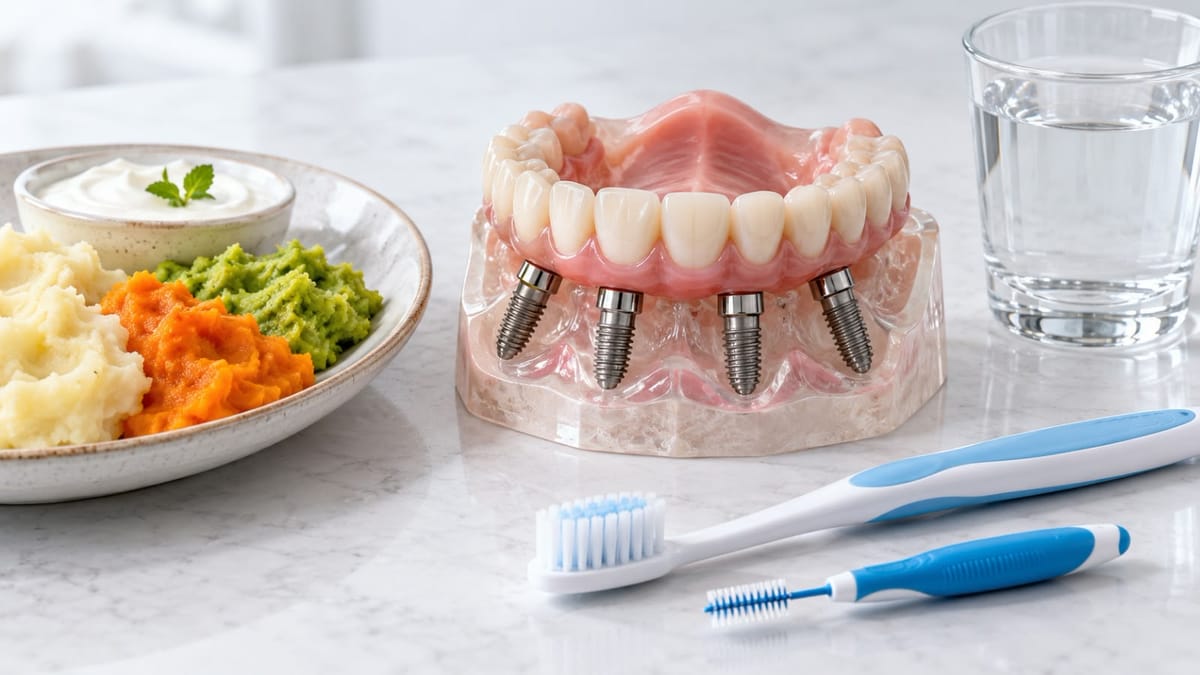
During the initial period, choose cool or lukewarm foods that require minimal chewing, such as:· Smooth yogurt· Applesauce· Mashed potatoes or sweet potatoes· Puréed soups that are not hot· Smoothies eaten with a spoon, not a straw· Protein shakes taken without a straw· Scrambled eggs· Oatmeal after it has cooled· Soft cottage cheese· Mashed avocadoAvoid foods or beverages that are very hot immediately after surgery, particularly while numb.
Continued healing: fork-tender foods
When the surgical team approves, patients may add foods that can be easily cut with the side of a fork and require little chewing, such as:· Soft pasta· Well-cooked vegetables· Eggs· Soft rice and beans· Flaked fish· Tender shredded chicken when approved· Soft tofu· Ripe banana· Soft bread without a hard crustChew gently and follow the exact restriction provided for the temporary bridge. Some patients need a no-chew or very soft diet for a longer period.
Nutrition matters
Soft does not have to mean nutritionally poor. Include adequate protein, hydration, and foods appropriate for diabetes, blood pressure, allergies, or other medical needs.Ask the clinical team for guidance if nausea, difficulty eating, or medication side effects prevent adequate food and fluid intake.
Foods and Habits to Avoid
Until the surgical team advances the diet, avoid:· Nuts and almonds· Ice· Popcorn· Seeds and hard granola· Hard candy· Raw carrots and other hard vegetables· Tough meat· Crusty bread· Chewy candy or caramel· Gum· Sticky foods· Chips and hard crackers· Biting directly into apples, corn on the cob, or similar foods· Using the teeth to open packages or hold objectsThe temporary bridge can feel stronger than it is. Do not “test” it by biting hard foods.Even after the final prosthesis is placed, chewing ice and using the teeth as tools can damage the prosthesis or components.
Why Diet Instructions Are So Important
Implants need protection from excessive micromovement during early integration. The bridge also connects several implants, which means forces may be transferred across the arch.Following the prescribed diet can help reduce the risk of:· Temporary-bridge fracture· Screw loosening· Bite overload· Pain during chewing· Disruption of implant healing· Need for unplanned repairPatient behavior matters, but outcomes should not be described as “50% doctor and 50% patient.” Healing depends on many factors, including diagnosis, surgery, bone, health, implant stability, bite, prosthetic design, maintenance, and adherence to instructions.
How Do You Clean an All-on-4® Bridge After Surgery?
Good plaque control is essential, but cleaning too aggressively during early healing can injure tissues. The correct technique changes as the gums heal.
Stage 1: Immediate Surgical Period
Follow the surgeon's instructions about when to begin brushing and rinsing.The plan may include:· Avoiding direct brushing over fresh incisions at first· Gently cleaning the approved areas with a soft manual toothbrush· Allowing toothpaste or water to fall from the mouth rather than forcefully spitting· Using warm saltwater rinses only when directed· Using a prescribed antimicrobial rinse only as instructedDo not automatically use an over-the-counter mouthwash. Some products contain alcohol or ingredients that may irritate healing tissues.
Stage 2: As the Gums Heal
The dental team may gradually introduce:· A soft-bristle toothbrush· Careful brushing along the prosthesis and gumline· Special floss or super floss· Interdental brushes of an approved size· Gauze or other cleaning aids beneath accessible areasDo not force floss, brushes, or other devices beneath tissues that are still swollen or healing.
Stage 3: Water Flosser When Clinically Approved
A water flosser can be helpful for long-term cleaning beneath a full-arch bridge, but it should not be started automatically after a fixed number of days.The clinician must confirm:· That the tissues have healed sufficiently· The appropriate pressure setting· Where the tip should be directed· How often it should be usedStarting too early or using excessive pressure may irritate healing tissue.
How Should Medications Be Taken?
Use antibiotics, pain medication, anti-inflammatory medication, or prescribed rinses exactly as directed.· Do not double a missed dose unless instructed.· Do not combine prescription and over-the-counter medication without checking for duplicate ingredients or interactions.· Do not drink alcohol while using medications that prohibit it.· Report rash, difficulty breathing, severe gastrointestinal symptoms, or another suspected reaction promptly.· Complete antibiotics as prescribed unless the clinician instructs otherwise because of a reaction.Patients who take anticoagulants, diabetes medication, blood-pressure medication, or other long-term prescriptions should follow the coordinated instructions from the prescribing healthcare professional and dental team.
Are Swelling, Bruising, and Soreness Normal?
Some swelling, bruising, soreness, tightness, and minor bleeding may be expected after full-arch surgery. Swelling may increase during the first few days before improving.The surgical team may recommend intermittent cold packs early in recovery and other measures later. Follow the timing provided for your case.Contact the clinic if symptoms are worsening rather than improving, are significantly different from what was explained, or interfere with breathing, swallowing, hydration, or medication use.
How Should You Sleep?
During early recovery, the team may recommend:· Sleeping with the head elevated· Using extra pillows or a recliner· Avoiding pressure on a swollen side of the face· Keeping water and the clinic's contact information nearbyFollow individual instructions, especially if you have sleep apnea or use a CPAP device. Discuss the device with the surgical and anesthesia teams before treatment.
When Can You Exercise?
Strenuous activity can increase bleeding, swelling, and discomfort during early recovery.Avoid exercise, heavy lifting, bending, swimming, surfing, and physically demanding excursions until the surgical team approves them. Return gradually according to healing and medical condition.Walking calmly may be appropriate for some patients, but treatment and recovery always take priority over tourism plans.
Why Smoking and Vaping Are Especially Risky
Smoking, vaping, nicotine, and marijuana can impair blood flow and healing and may increase the risk of infection and implant complications.The safest approach is to stop before surgery and remain tobacco- and nicotine-free during healing and long-term implant maintenance. Ask the medical or dental team for cessation support if needed.Do not assume that vaping is a safe alternative during recovery.
When Can You Drink Alcohol?
Avoid alcohol after surgery until the surgical team has approved it and all medication restrictions have ended.Alcohol can interact with sedatives, pain medication, antibiotics, and other prescriptions. It may also affect hydration, judgment, bleeding, and healing.
What If the Temporary Bridge Feels Loose or Breaks?
Do not continue chewing on a loose, cracked, or broken prosthesis.Contact Esthetic Dent promptly and provide:· A description of what happened· Photographs or video when requested· Whether there is pain, swelling, bleeding, or mobility· Whether a piece has detached· What you were eating or doing when the change occurredDo not attempt to glue, tighten, or repair the bridge yourself.A return to Costa Rica is not automatically required for every issue. The team first evaluates the situation and coordinates the appropriate next step, which may involve remote guidance, a local dentist, an adjustment, repair, or an in-person visit.
What If the Bite Feels Uneven?
An uneven bite can overload the temporary bridge or individual implants.Contact the clinic if:· One area touches before the rest· Chewing causes focal pain· The bridge feels as if it rocks or moves· Teeth are repeatedly striking in an uncomfortable way· The jaw feels increasingly strainedDo not wait until the second trip if a bite problem is placing repeated force on the bridge.
Warning Signs: When Should You Contact the Clinic?
Contact Esthetic Dent promptly for:· Bleeding that does not respond to the instructed measures· Swelling that becomes worse after the expected early period· Fever or chills· Increasing rather than improving pain· Persistent bad taste, pus, or drainage· A loose implant component or prosthesis· A cracked or broken temporary bridge· A suddenly uneven bite· Inability to eat, drink, or take medication· Numbness or altered sensation that is new, worsening, or different from what was explained· Persistent vomiting or medication reactionSeek emergency medical care immediately for difficulty breathing or swallowing, chest pain, loss of consciousness, severe allergic reaction, uncontrolled bleeding, or another potentially life-threatening symptom.
Follow-Up Before the Second Trip
All-on-X treatment commonly involves a healing period before the final restoration.Esthetic Dent follows up with patients while the implants integrate. Follow-up may include:· Review of symptoms and healing· Photographs or secure virtual communication· Hygiene coaching· Diet progression· Evaluation of the temporary bridge· Coordination with a local dentist when needed· Planning the second tripThe general integration estimate is approximately six months, but the exact timing is confirmed clinically.Do not wait for a scheduled check-in if a concern develops.
Preparing for the Final Restoration
Before the second trip, the team evaluates whether healing is appropriate for final restorative work.The restorative visit may include digital records, try-ins, evaluation of speech and bite, final laboratory fabrication, placement, adjustments, and hygiene instruction.Because a full arch involves six or more restorative units, the second trip generally requires approximately nine business days. Arrival and departure days are added separately.
Long-Term Care After the Final Bridge
The final prosthesis still requires daily and professional maintenance.Long-term care may include:· Brushing at least twice daily· Cleaning beneath the bridge· Super floss or implant-specific floss· Interdental brushes· Water flosser use at the approved setting· Professional implant maintenance· Periodic X-rays when indicated· A night guard when grinding is present· Avoiding ice and using the teeth as toolsImplants do not get cavities, but plaque can cause inflammation and bone loss around them. Screws, prosthetic teeth, and other components may also need adjustment, repair, or replacement over time.
Warranty and Patient Responsibilities
Esthetic Dent provides a lifetime guarantee on dental implants and restorations according to its complete written warranty.Coverage depends on documented conditions that may include:· Daily hygiene· Professional maintenance· Follow-up· Use of prescribed protective devices· Reporting concerns promptly· Avoiding damaging habits· Following diet and recovery instructionsThe warranty does not mean complications cannot occur. Review the complete terms before treatment and keep a copy with your records.
Your Recovery Checklist
Before leaving Costa Rica, confirm that you have:· Written medication instructions· Written diet instructions· Written cleaning instructions· Approved toothbrush and cleaning aids· The clinic's contact information· A follow-up date· Information about warning signs· Implant and component records when available· Temporary-bridge instructions· Warranty and maintenance information· The estimated timing of the second trip
Contact Esthetic Dent During Recovery
If you are uncertain about food, hygiene, medications, activity, swelling, the bite, or the temporary bridge, contact the Dental Advisor rather than guessing.Esthetic Dent remains available during recovery, between implant phases, and after final treatment. Patient information and clinical records are handled and transferred through secure, HIPAA-compliant processes.
Frequently Asked Questions About All-on-4® Recovery
What can I eat after All-on-4® surgery?
Begin with the liquids and very soft foods approved by the surgical team. Progress to fork-tender foods only when instructed. Avoid hard, crunchy, sticky, and chewy foods while the implants integrate and the temporary bridge is in place.
How long do I need to follow a soft-food diet?
The duration depends on implant stability, surgery, bone, temporary prosthesis, bite, and healing. Some patients require a soft or no-chew diet for an extended period. Follow the individual timeline rather than a general internet recommendation.
Can I use a Waterpik immediately after surgery?
No, not unless the clinician specifically authorizes it. A water flosser can be useful later, but the tissue must heal sufficiently and the correct pressure and technique must be explained.
Should I use antimicrobial mouthwash?
Use an antimicrobial rinse only if prescribed or approved by the surgical team. Do not substitute an over-the-counter mouthwash without checking, because some products may irritate healing tissues.
When can I brush my All-on-4® bridge?
The team will explain when to begin and which areas to avoid. Early cleaning is gentle and changes as the gums heal. Do not brush directly over fresh incisions unless instructed.
Can I smoke or vape after implant surgery?
Smoking and vaping can impair healing and increase implant complications. Avoid tobacco, nicotine, marijuana smoke, and vaping before and after surgery according to the clinical plan. Long-term avoidance provides the best protection.
What should I do if the temporary bridge breaks?
Stop chewing on it and contact Esthetic Dent promptly. Do not glue or repair it yourself. The team will review the situation and coordinate repair or evaluation.
Is swelling normal after All-on-4® surgery?
Some swelling and bruising can be expected and may increase during the first few days before improving. Contact the clinic if swelling is worsening beyond the expected period, is accompanied by fever or drainage, or affects breathing or swallowing.
When can I return to normal exercise?
Return only when the surgical team approves it. Strenuous activity, swimming, surfing, and heavy lifting may need to be avoided during early healing.
Why does the bite matter during healing?
An uneven bite can concentrate force on one part of the bridge or specific implants. Report early contact, rocking, focal pain, or repeated uncomfortable striking promptly.
Keep reading

Dental Treatment Recovery: What to Expect and How to Support Healing
Having a dental procedure can feel intimidating, especially when you are traveling for care and do not know exactly how you will feel afterward.Recovery is not the same for every patient or procedure. A crown, veneer, or filling may cause brief sensitivity, while extractions, implant placement, bone grafting, sinus surgery, or full-arch treatment require more structured healing and activity restri